Since 1877 · Westouter
Our story
The story of restaurant De Zwaan began in 2017. A characterful building that had stood empty for some time and badly needed some love caught our attention. On 1 May 2017, the day finally came: De Zwaan was reborn as a cosy restaurant in Westouter. Step by step the concept was refined, while the building from 1877 was thoroughly renovated.
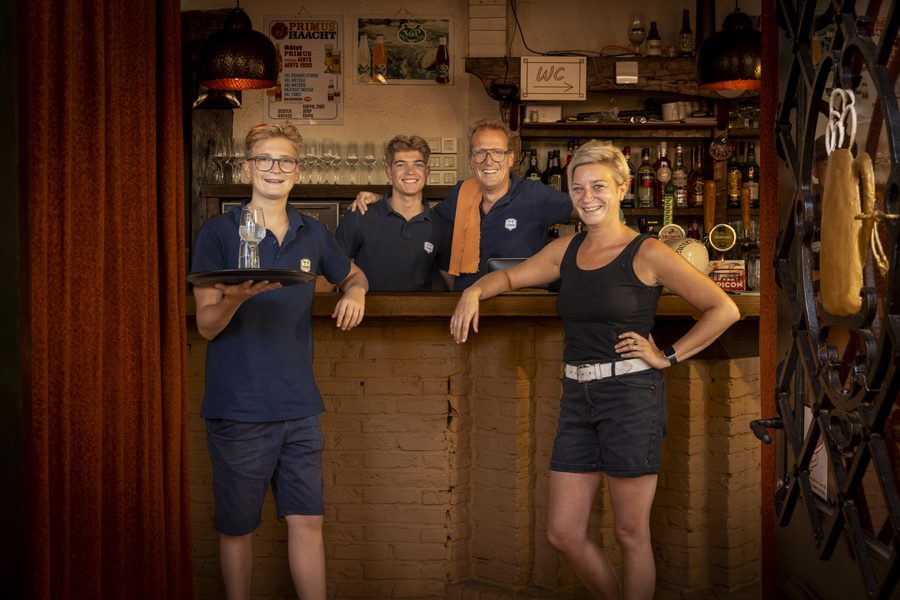
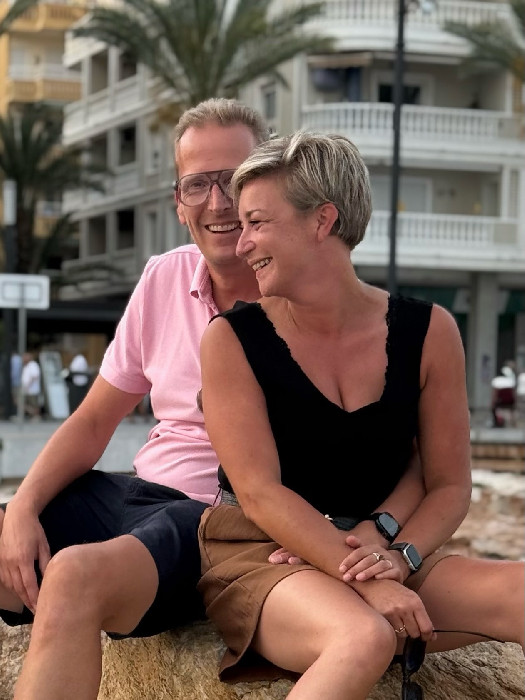
Now, so many years later, a warm and characterful restaurant stands in the heart of Westouter, right next to the church — complete with a cosy wood stove and open fireplace. Hostess Lot takes care of honest, home-style cooking, always prepared and served with love. Host Jork looks after the family-style service and genuine, personal hospitality. Sons Emile & Tuur are also regularly found serving tables or in the kitchen, making De Zwaan a true family restaurant.
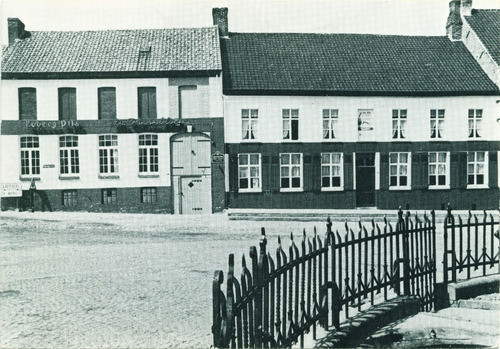
In the heart of Westouter, right across from the church, stands a building that has been gathering stories for generations: the Corneblomme brewery and the In De Zwaan inn.
Anyone walking past the white façade today might just see a cosy village café or an old inn. But behind those walls lies a history of beer, war, village conviviality and stubborn survival.
The history begins in the second half of the nineteenth century. Westouter was then a lively hilltop village where farmers, traders and travellers stopped after long days in the fields or on dusty roads. It was during this time that the Corneblomme brewery was built, together with the In De Zwaan inn. Brewing and innkeeping went hand in hand back then: whoever made beer also needed a place to serve it.
The name “Corneblomme” stood proudly on the façade. Inside it smelled of malt, wood fire and fresh beer. Horse carts rattled over the cobblestones as farmers came in for a pint after work. In the taproom, stories were told about the harvest, about the nearby French border, and about the whims of Heuvelland's weather.

When the First World War broke out, everything changed. The area around Westouter lay close to the Ypres front. Villages were destroyed, houses disappeared under shells and fire. But by some miracle, the Corneblomme and De Zwaan buildings remained standing. Together with only a handful of other buildings, they escaped the total destruction of the village. This later made them a rare surviving fragment of old Westouter, a tangible reminder of what the village looked like before the war.
After the war, life slowly returned. Walkers, smugglers, farmers and cycling tourists once again found their way to De Zwaan. The inn grew into a fixed meeting place in the village. There was celebrating, mourning, bargaining and singing. Generations of the same families sat at the same wooden tables.
Especially during the twentieth century, De Zwaan became a household name in Westouter. The Corneblomme function hall hosted weddings, card game evenings, cycling festivals and brass band gatherings. Anyone who grew up in Westouter has almost certainly attended a family celebration within those old walls.
Over the years, the world outside the café changed quickly. Small breweries disappeared, cafés struggled, and village life grew quieter. Yet De Zwaan endured.
Today the building still breathes history. Walkers descending from the Rodeberg or Zwarteberg hills stop by for a local beer and an honest meal. Outside you can still hear the soft murmur of a village café, while inside time seems to slow down.
And perhaps that is the most beautiful thing about De Zwaan and Corneblomme: they never became museums. They have remained living places, where past and present sit together at the table — a pint in hand and the Heuvelland on the horizon.